
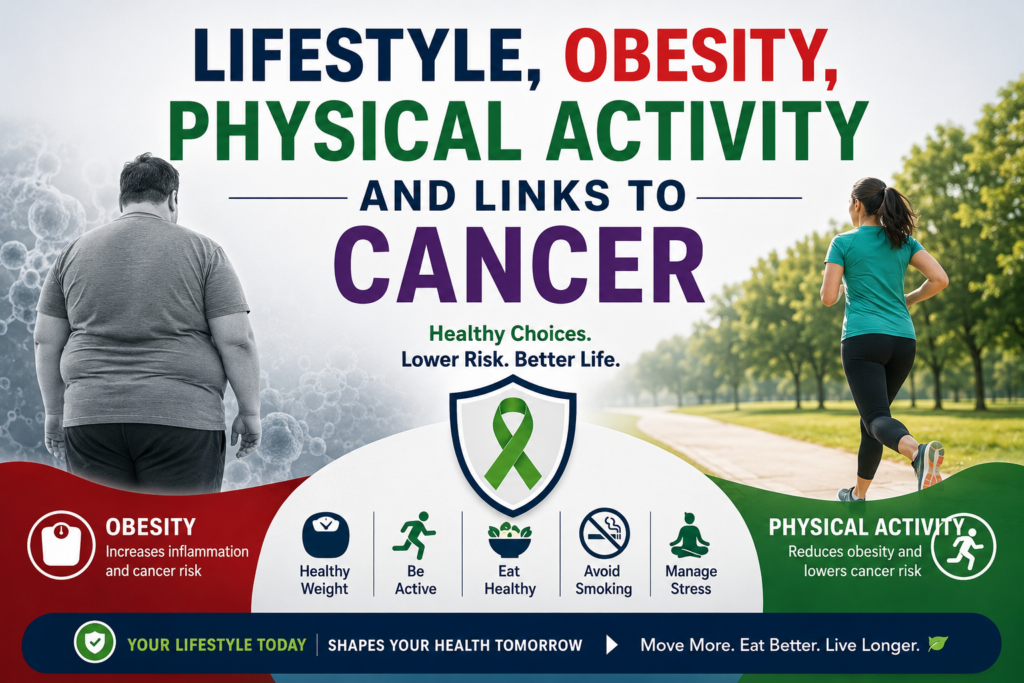
There is growing public curiosity about the link between obesity, physical inactivity, and cancer. The hope that lifestyle changes may help prevent cancer has made this topic even more interesting.
BMI categories
Underweight: less than 18.5
Normal weight: 18.5–24.9
Overweight: 25.0–29.9
Obese: more than 30
Obesity class 1: 30.0–34.9
Obesity class 2: 35.0–39.9
Obesity class 3: more than 40
Obesity is defined as a BMI greater than 30. BMI is calculated using the formula: weight in kilograms divided by height in meters squared. According to the WHO, BMI is classified into the above categories.
A US study in 2003 involving 900,000 people found that people with obesity had more than a 50% higher chance of developing cancer and dying from cancer compared with others. Since then, many studies have been designed to understand this better. In 2016, a team of 21 international experts reviewed more than 1,000 studies and confirmed that obesity is associated with 13 different cancers.
The relative risk of obesity, which measures how much more likely cancer is in obese people compared with non-obese people, was found to be 7.1 for endometrial cancer, 4.8 for esophageal cancer, and more than 1.5 for cancers of the stomach, colon, liver, gallbladder, pancreas, breast after menopause, ovary, kidney, thyroid, multiple myeloma, and meningioma.
Obesity plays a role not only in the development of cancer but also in its outcomes. Studies have shown that obese cancer patients have a higher risk of cancer recurrence and cancer-related death compared with patients with normal body weight. Since obesity is also associated with diabetes, heart attack, and hypertension, it becomes an important indirect cause of non-cancer deaths in cancer patients as well. It can also negatively affect recovery after surgery and reduce tolerance to chemotherapy and radiotherapy, thereby increasing treatment-related side effects.
Along with research on the link between obesity and cancer, many studies have also examined the beneficial effects of physical activity. A review of 250 studies found that physical activity may help reduce the risk of colon, postmenopausal breast, and endometrial cancers. Many health organizations have issued public guidelines in this regard.
In summary, avoiding excess weight at all ages, staying physically active [150 minutes per week of moderate-intensity activity such as walking, or 75 minutes per week of vigorous activity such as gym exercise, or a combination of both], following a healthy diet [balanced diet, limited meat intake, more than 2.5 cups (250–500 g) of fruits and vegetables per day, and whole grains instead of refined grains], and avoiding tobacco and alcohol can help achieve a healthy body weight.